


Almost every small business owner who thinks about ads asks the same question.
“Should I put my money on Google, or on Instagram and Facebook?”
Friends give different answers. One says Instagram is where everyone is. Another says Google brings “real” customers. An agency may suggest doing both at once, from day one.
The honest answer is: it depends on how your customers find you today. This article explains the difference in plain words, so you can choose your first step with confidence.
Two very different moments
Think about two people.
The first one has a broken air conditioner in May. She picks up her phone and types “AC repair near me”. She needs help now.
The second one is scrolling Instagram at night, looking at friends’ photos. She is not looking for anything. Then she sees a short video of a beautiful handmade lamp, and thinks, “Oh, I like that.”
Both can become customers. But they are in very different moments.
- Google search ads reach the first person. Your ad appears when someone types words like “AC repair Jaipur” into Google. They already want what you sell.
- Instagram and Facebook ads (both run by the same company, Meta) reach the second person. Your ad appears while people scroll. They were not looking, but your ad can make them want it.
Neither is better. They do different jobs.
What search ads are good at
Search ads are like a signboard that only lights up when someone walks past asking for you.
They work well when:
- people already search for your kind of service — plumbers, dentists, coaching classes, packers and movers, repairs, wedding venues;
- the need is urgent or planned — “today”, “near me”, “best in my city”;
- the customer is likely to call, message or visit soon after searching.
Because people are already looking, search ads often bring enquiries more quickly. The catch: if very few people search for what you sell, there is not much to show your ad to. And in busy categories, many businesses compete for the same searches, so each click can cost more.
Google Ads itself starts every new advertiser with the same question: what is your goal? The campaign type follows from it — search ads for people already looking, other types for being seen.
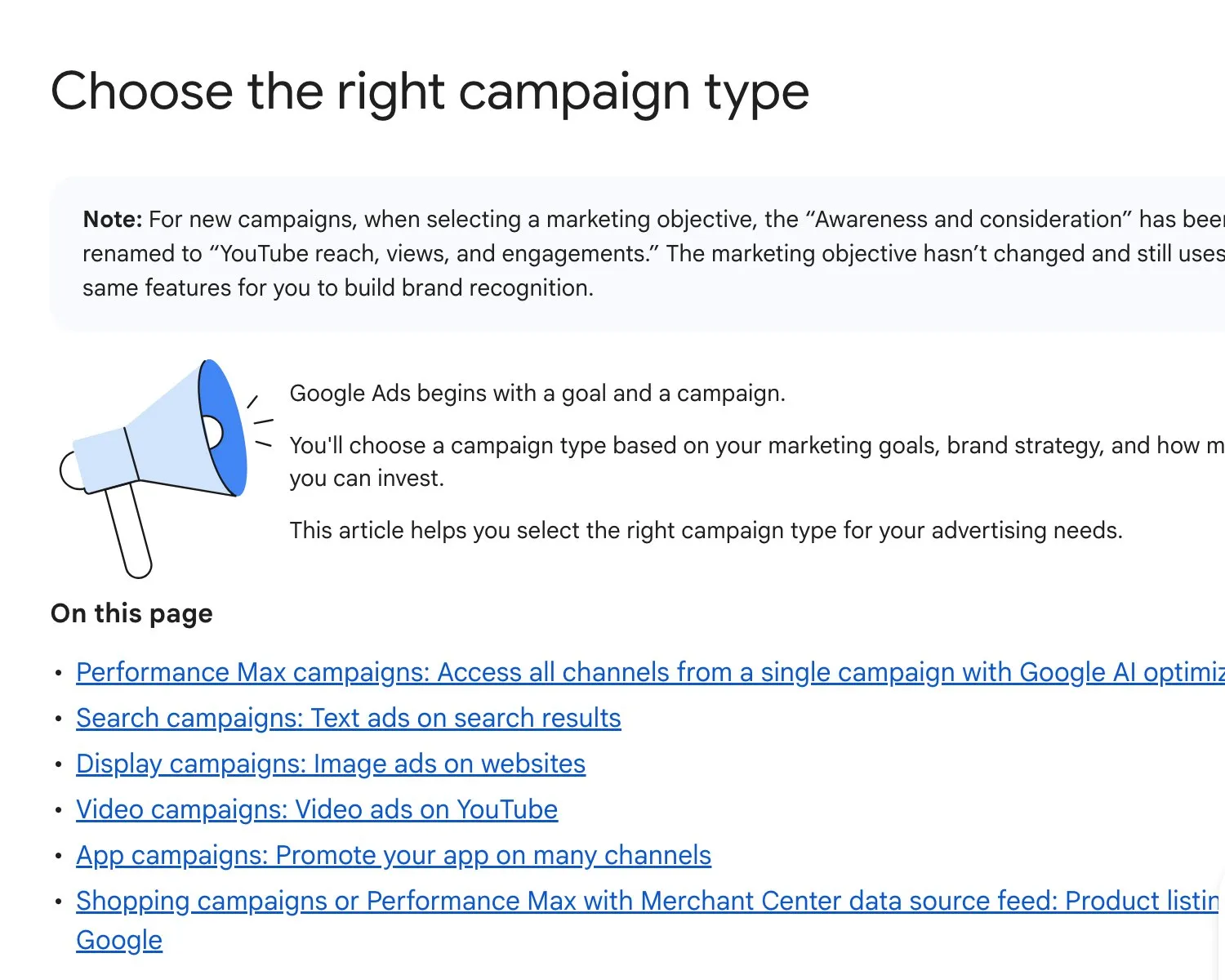
Google Ads Help, “Choose the right campaign type”. Screenshot taken 23 October 2026.
What Instagram and Facebook ads are good at
Instagram and Facebook ads are like a stall at a busy fair. Lots of people walk past. Most are not shopping for you — but if your stall looks good, some will stop.
They work well when:
- your product looks good in a photo or short video — clothes, jewellery, food, home décor, gifts, salons, cafés;
- people buy because they see it and like it, not because they planned to search;
- the product is new or unusual, so people do not know to search for it yet;
- you want people to remember your name for later.
The catch: the ad must catch attention in a second or two, so you need good photos or short videos. And because people were not planning to buy, it can take longer to turn a viewer into a customer.
How to choose your first one
Answer these four questions honestly.
1. Do people search for what I sell? Open Google and type what a customer would type, with your city name. For example, “cake shop in Indore” or “physiotherapist Pune”. If you see lots of businesses and ads, people clearly search for it. That points to search ads.
2. Does my product sell by being seen? If a customer usually says “I saw it and loved it”, that points to Instagram and Facebook.
3. Do I have good photos and short videos? Social ads depend on them. If you have none yet, either make a few simple ones first, or start with search ads, which are mostly text.
4. How do customers reach me today? If most customers already find you on Google Maps or by searching, search ads build on that habit. If most come from Instagram or WhatsApp after seeing your posts, social ads build on that.
A rough rule:
- Service people need, and search for → start with Google search ads.
- Product people want once they see it → start with Instagram and Facebook ads.
- Not sure → start with the one closest to how your best customers found you so far.
Start small, and start with one
It is tempting to try everything at once. Please don’t. With a small budget split across many places, each one gets too little money to learn anything, and you cannot tell what worked.
Instead:
- Pick one platform.
- Set a daily budget you can comfortably afford to spend while you learn — money you would not miss if the first month is only a lesson.
- Decide what counts as a result before you begin: a call, a WhatsApp message, a form, a sale. Make sure each one is being counted properly.
- Give it a few weeks. Ad apps need a little time to learn who responds. Judging after two days is like judging a new shop on its first morning.
- Then look at real life: how many real customers came, and what each one cost you.
Once one platform works, add the second. Many businesses end up using both: search ads to catch people who are ready now, and Instagram ads to make new people aware of them.
A note for businesses outside India
The same thinking works anywhere. Google and Meta ads work in the same basic way in most countries. The only difference is local: what people search for, and which apps they use most. Always check by searching yourself, in your own city.
Your checklist for this week
- Search on Google for your service and city, the way a customer would. Note what you see.
- Ask your last ten customers how they found you: Google, Instagram, a friend, or walking past.
- Look at your photos and videos. Do you have three or four good ones? If not, make some.
- Choose one platform to start with, based on the answers above.
- Write down what a “result” means for you, and make sure it can be counted.
- Set a small monthly amount you are comfortable learning with, and a date to review it.
If you would like a second opinion on where to start, message us on WhatsApp — we reply 24/7.
Sources
The official pages this guide is based on:


